Problem and success criteria
Start by defining what the prototype must prove, how it will be used, and what technical uncertainty matters most.
Project development
Turn an IoT idea into a clearer prototype path across hardware, firmware, connectivity, dashboards, and testing.
If you also want the regional entry point, start with the Nepal page.
Where this support helps most
The broader IoT System Development service covers the wider capability. Use this path when the main question is what to build first, how the architecture fits together, and how to reduce risk before the system becomes expensive.
Good IoT project development usually depends on sequencing the decisions in a way that exposes risk early.
Start by defining what the prototype must prove, how it will be used, and what technical uncertainty matters most.
Select sensors, controllers, power assumptions, and physical constraints that make the first build realistic.
Define local logic, buffering, transport method, and how the device behaves when communication is unreliable.
Plan how the data becomes useful once it leaves the device, including telemetry structure and operator-facing visibility.
Use evidence from the prototype to refine the design instead of assuming the first architecture is already correct.
01
Review whether the idea is practical, what the prototype must validate, and which constraints should drive the first technical decisions.
02
Move through hardware, firmware, connectivity, and software integration with a clear path to a working proof of concept.
03
Use testing findings, field behavior, and prototype gaps to improve the architecture before committing further.
Startups with a new connected product idea
Organizations exploring monitoring or automation systems
Researchers building data-collection or instrumentation prototypes
Product teams that need a working proof of concept before deeper investment
Students who need responsible technical guidance around a real prototype
Solution Area
Connected-device architectures for unattended equipment, GSM/LTE telemetry, LoRa links, Wi-Fi access, buffering, retries, and remote device-health visibility.
Solution Area
Monitoring systems for air, weather, water, and environmental conditions where sensing, buffering, connectivity, and dashboard visibility all matter.
Solution Area
Connected sensing and control systems for irrigation, greenhouse conditions, water availability, and remote agricultural telemetry.
Example engineering work
These projects are useful because they show how sensing, control, connectivity, and monitoring become one prototype path rather than disconnected tasks.

A flexible ESP32-based agricultural automation system with Wi-Fi and GSM connectivity, sensor-driven control, manual and automatic operation, and mobile and web monitoring.
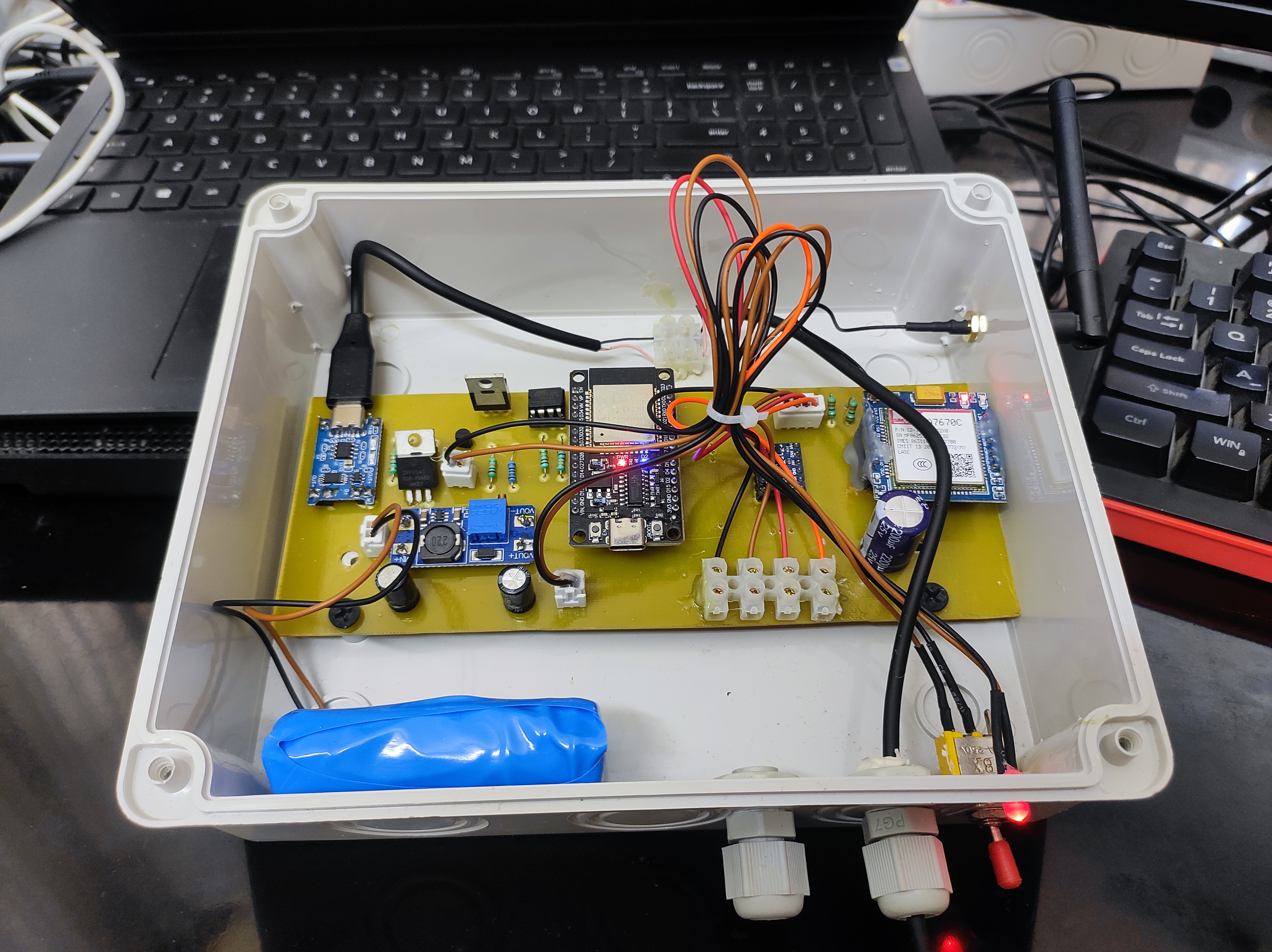
A compact ESP32-based microclimate monitoring device using an SHT45 sensor, GSM communication, OTA firmware updates, and 18650 Li-ion battery backup.
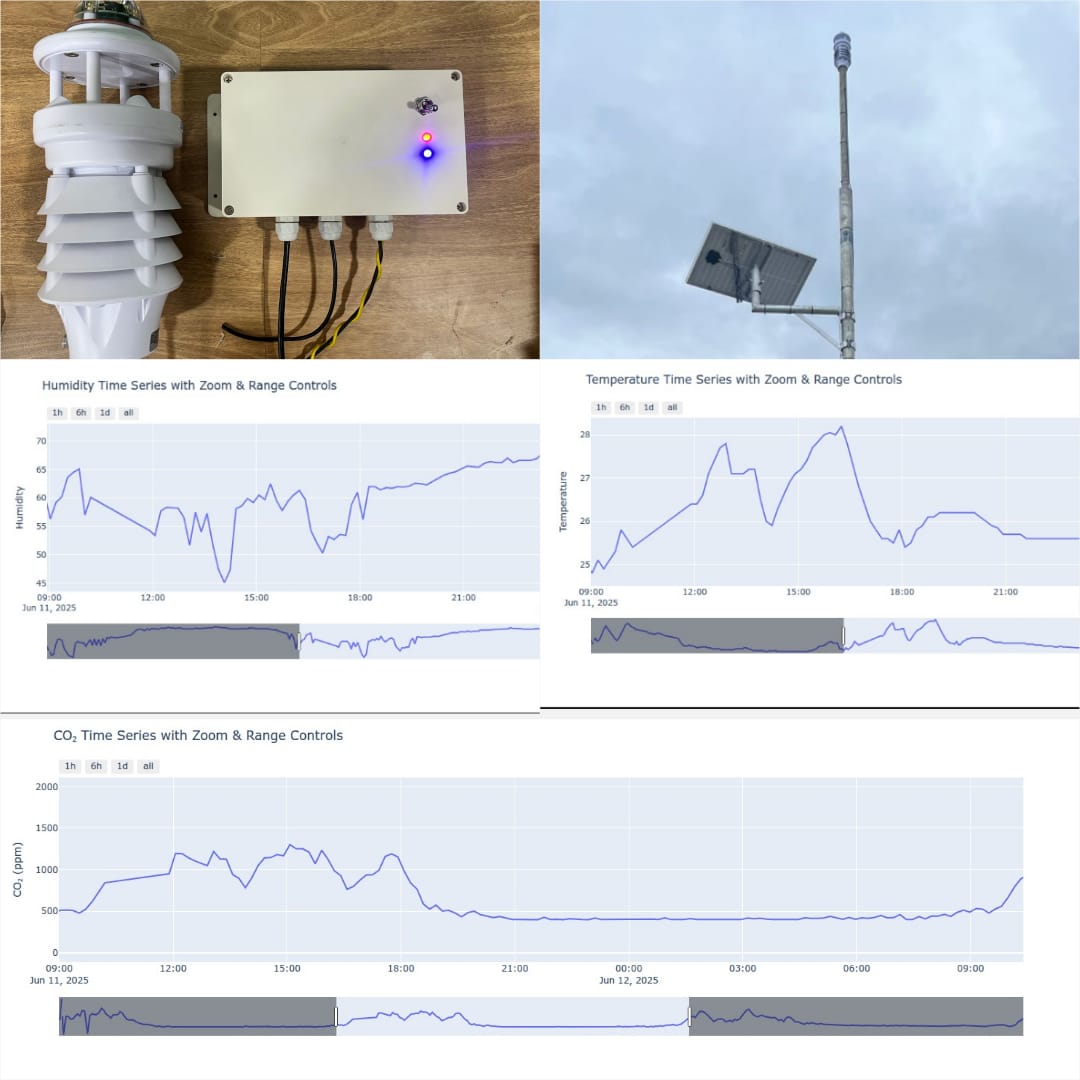
A solar-powered ESP32 weather station that monitors temperature, humidity, CO₂, light intensity, wind, PM2.5, and PM10 using RS485-connected sensors and GSM-based remote communication.
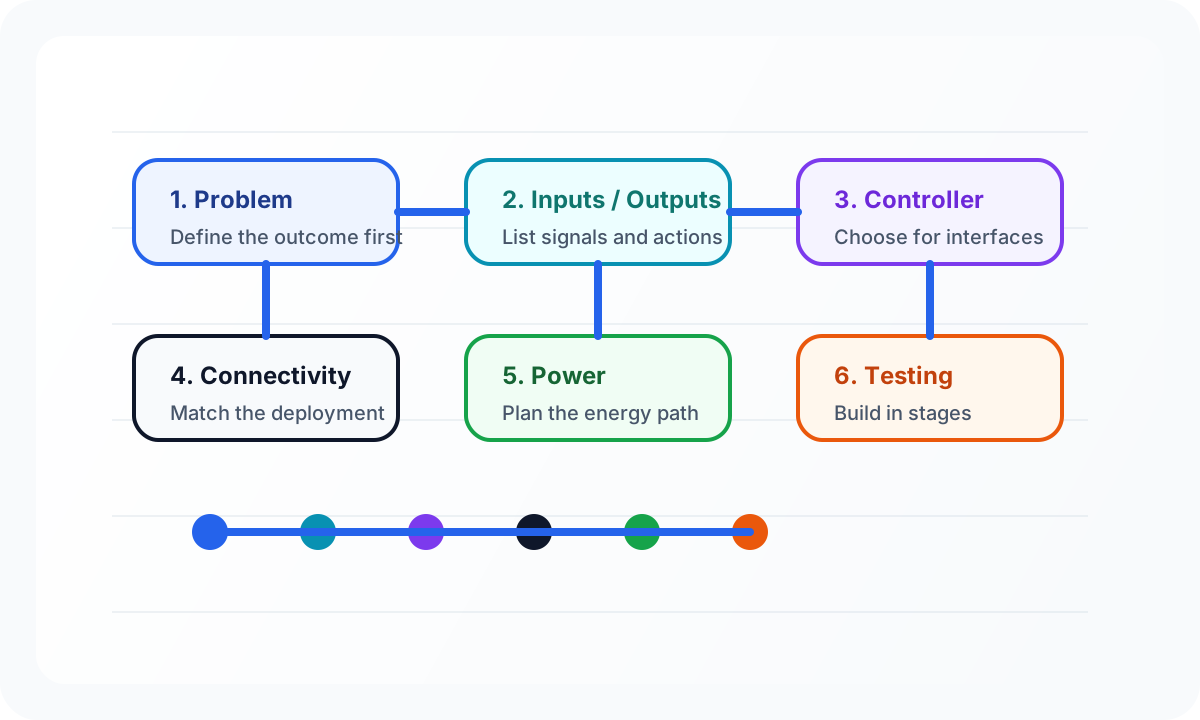
A practical planning checklist for students, startups, and technical founders who want to define the problem, interfaces, power path, and test stages before ordering hardware.
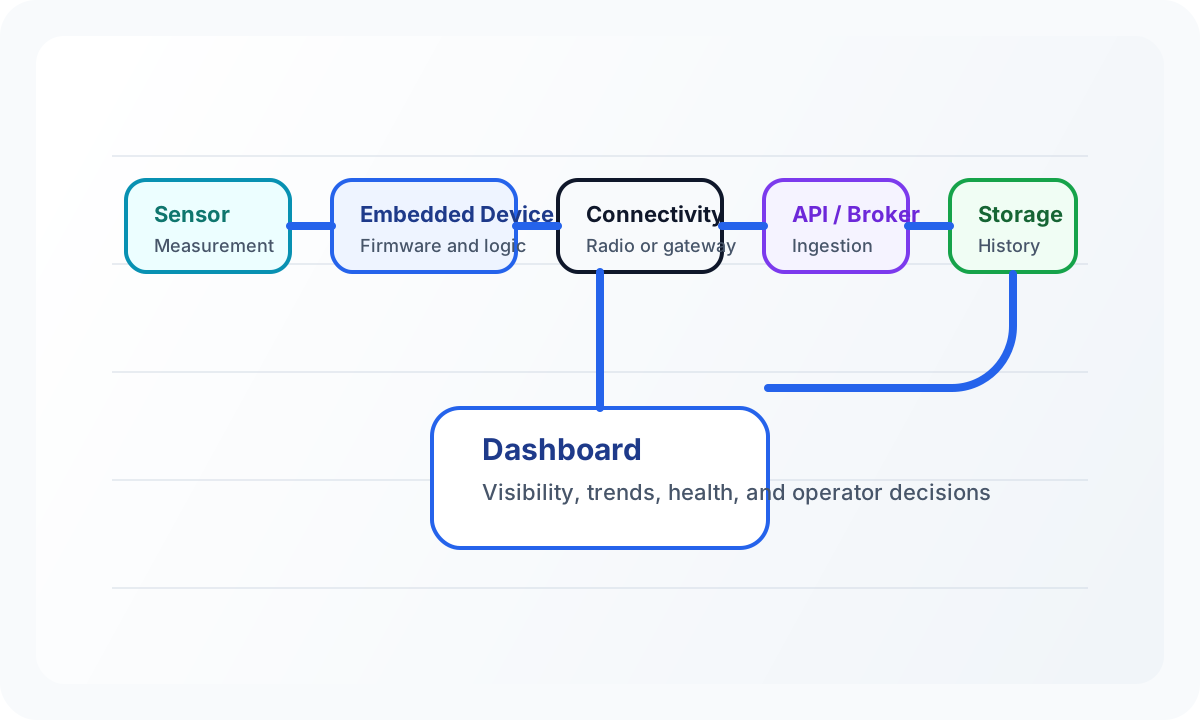
A layer-by-layer explanation of how data moves from physical sensors to APIs, storage, dashboards, and operator decisions in a practical IoT system.
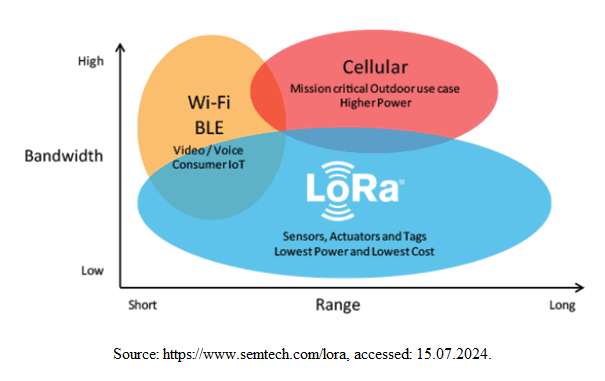
A practical framework for selecting the right wireless link for an IoT device based on range, power, infrastructure, bandwidth, and field conditions.
Next Step
Start with the system question, the risky assumption, or the field constraint. That is usually the fastest way to shape the right project-development path.