01
Clarify the project objective
Review the idea, practical constraints, expected outputs, and which part of the work is still technically uncertain.
Academic discovery
Responsible technical support for final-year and research prototypes across architecture, prototyping, debugging, connectivity, and documentation.
If you also want Nepal-focused examples and entry points, use the Nepal page.
Where this support helps most
The broader Research & Academic Prototyping service covers the wider capability. Use this path when you need the scope, boundaries, and support model clarified up front for a final-year or research build.
01
Review the idea, practical constraints, expected outputs, and which part of the work is still technically uncertain.
02
Provide guidance, implementation help, debugging support, and architecture direction across the hardware and software layers.
03
Strengthen the prototype through testing guidance, clearer technical decisions, and more useful documentation support.
Final-year students building IoT or embedded prototypes
Researchers who need instrumentation or connected-system guidance
Student teams combining hardware, firmware, and dashboard work
Academic projects that need better technical structure before implementation
Working boundaries
Example engineering work
These are not assignment templates. They are examples of real connected-system thinking across embedded logic, sensing, telemetry, and technical investigation.

A flexible ESP32-based agricultural automation system with Wi-Fi and GSM connectivity, sensor-driven control, manual and automatic operation, and mobile and web monitoring.
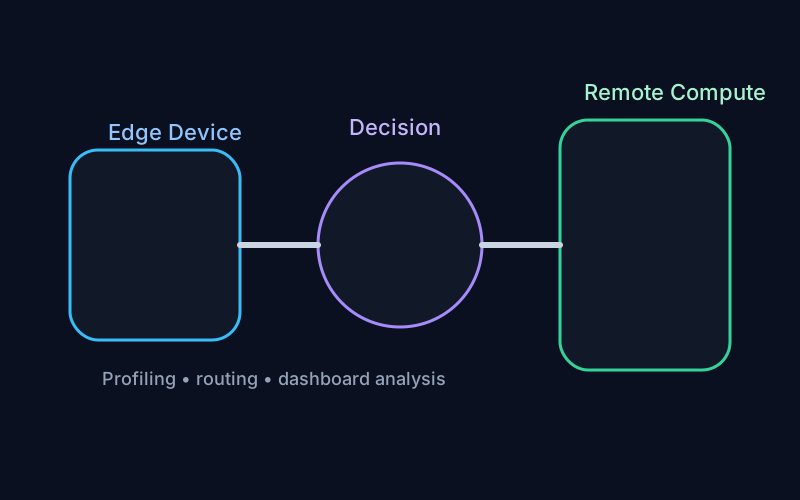
A research-driven prototype exploring when constrained edge devices should process tasks locally versus handing selected workloads to a more capable remote compute path.
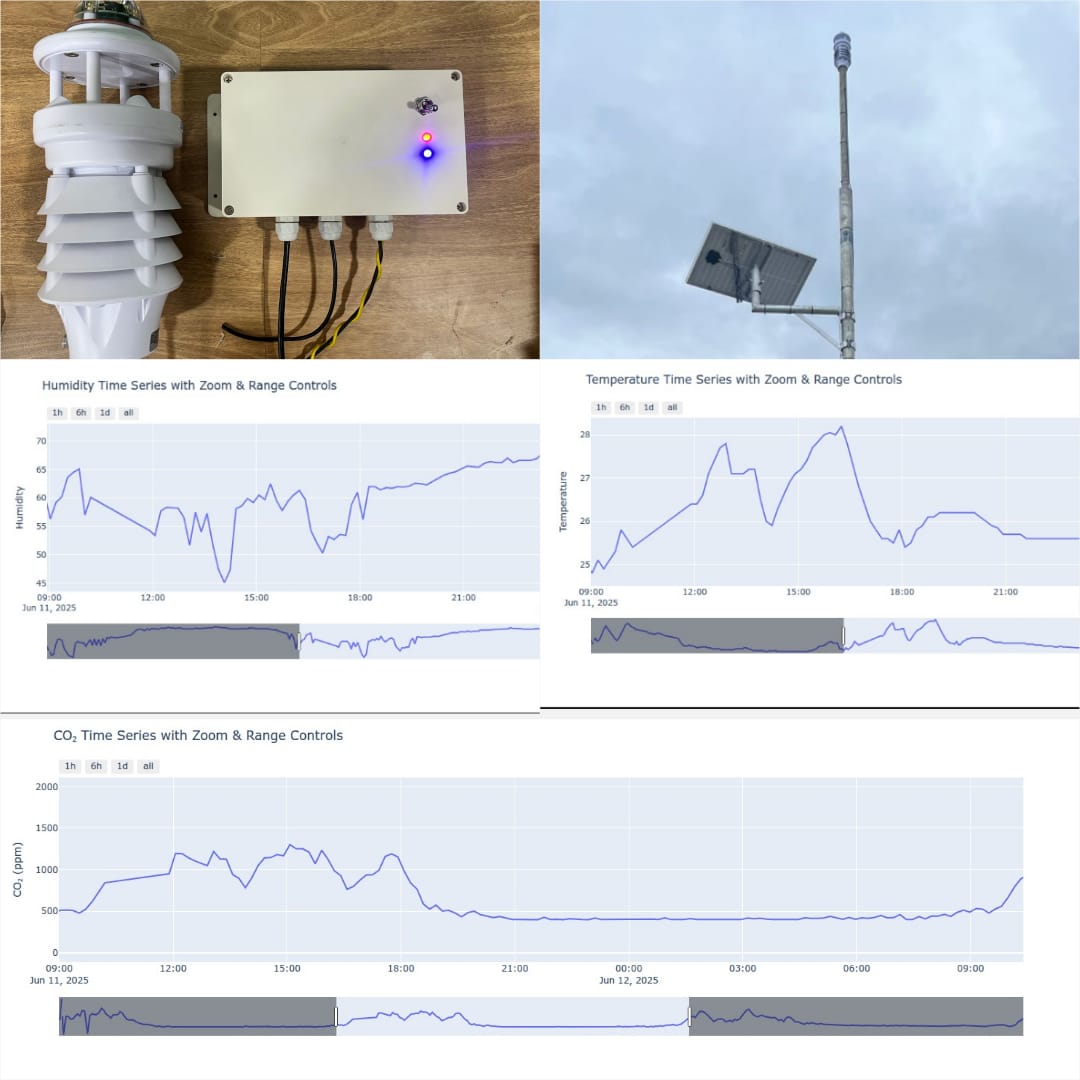
A solar-powered ESP32 weather station that monitors temperature, humidity, CO₂, light intensity, wind, PM2.5, and PM10 using RS485-connected sensors and GSM-based remote communication.
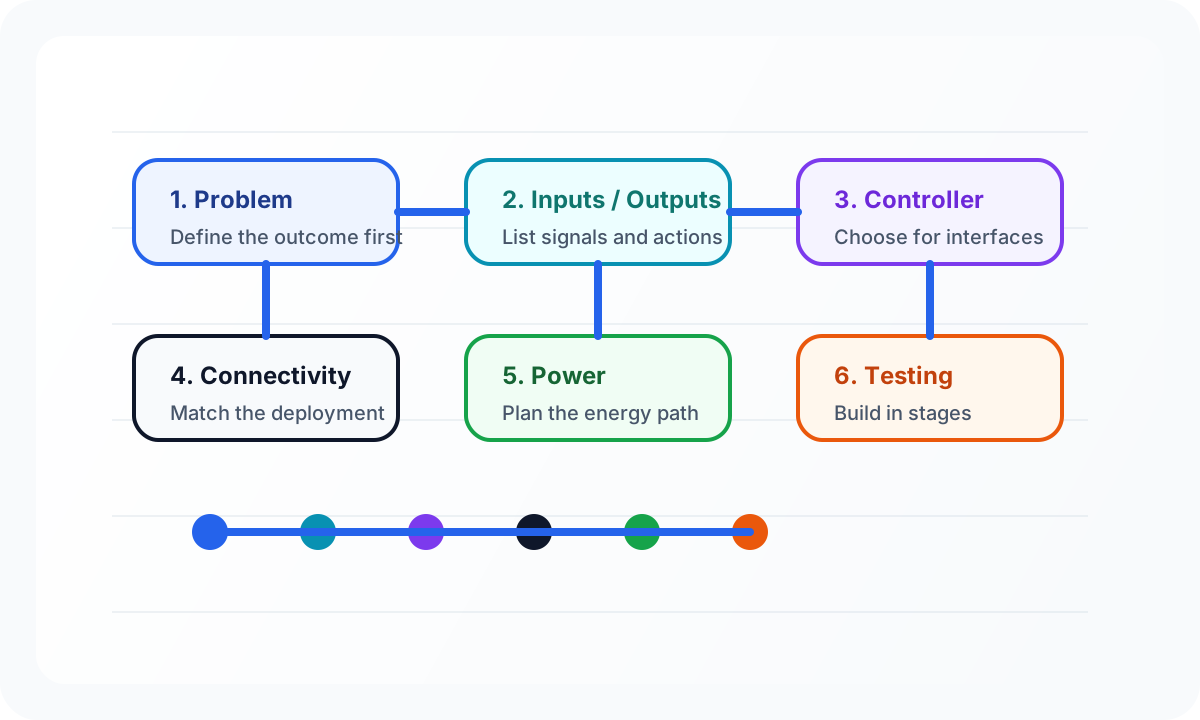
A practical planning checklist for students, startups, and technical founders who want to define the problem, interfaces, power path, and test stages before ordering hardware.
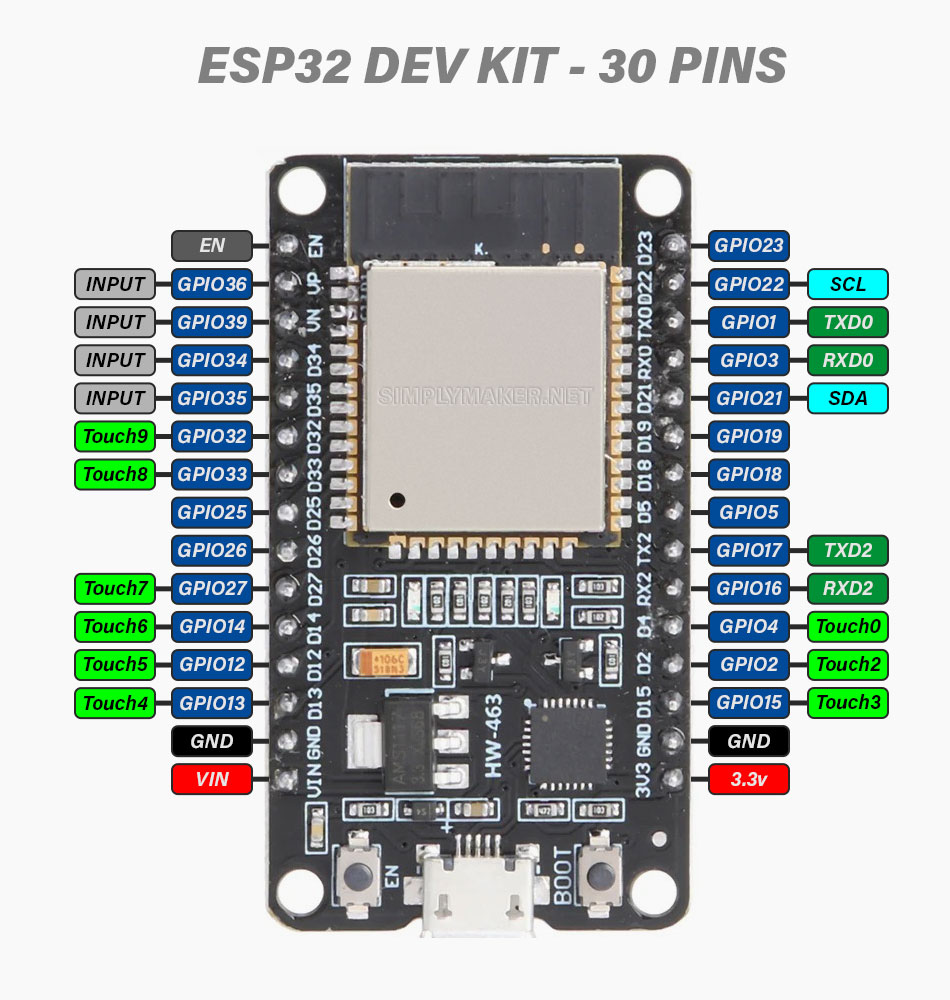
A grounded look at what ESP32 is good at in early IoT development, where its interfaces help, and when a different platform may be a better choice.
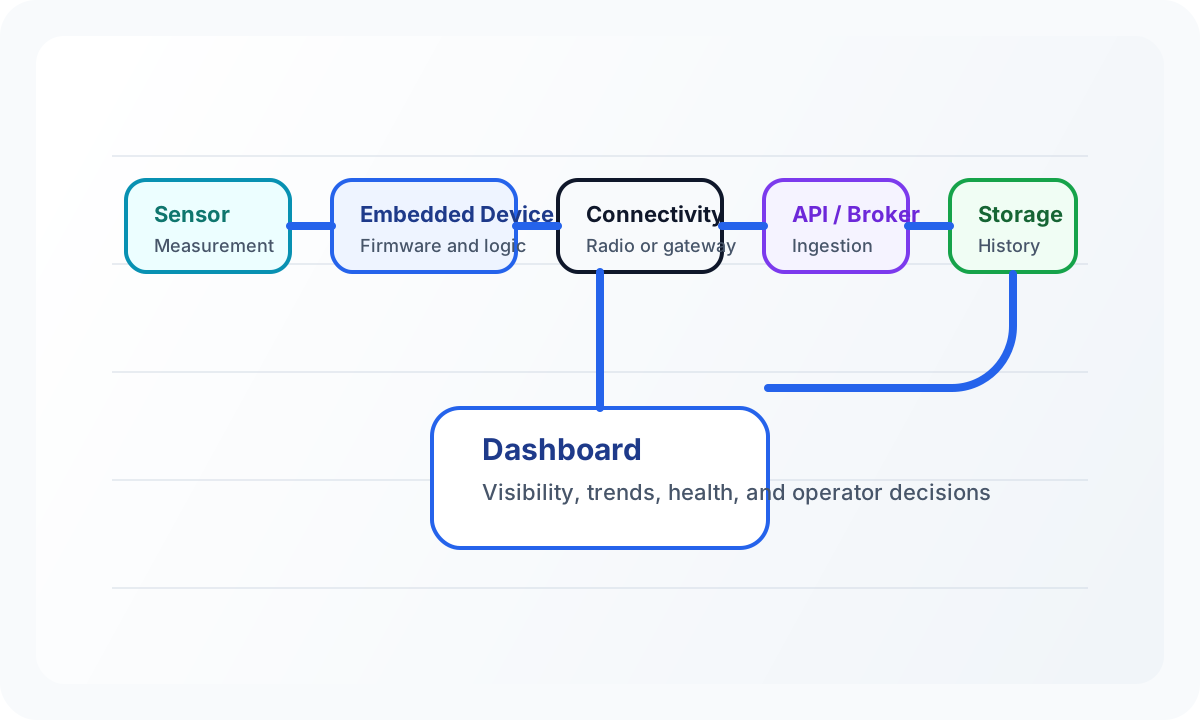
A layer-by-layer explanation of how data moves from physical sensors to APIs, storage, dashboards, and operator decisions in a practical IoT system.
Yes. ESP32-based sensing, communications, and prototype workflows are a practical fit when the project needs connected embedded behavior.
No. Technical support can still be discussed for remote collaboration as well as Nepal-based work.
Yes. Documentation guidance can be part of the support, especially where the technical explanation of the prototype needs to become clearer.
No. The support is intended to strengthen learning, implementation quality, and technical clarity without replacing the student’s own academic responsibility.
Next Step
Start with the actual engineering bottleneck: architecture, component choice, debugging, telemetry, or documentation clarity.