Edge Device Profiler
Measures local resource conditions and captures the metadata needed for execution decisions.
A research-driven prototype exploring when constrained edge devices should process tasks locally versus handing selected workloads to a more capable remote compute path.
An in-development research prototype that studies workload partitioning between embedded devices and remote compute services, with attention to latency, resource limits, telemetry, and operator visibility.
Constrained IoT devices cannot always process every workload locally, but blindly offloading work can introduce latency, dependency, and reliability problems that make the system worse rather than better.
Compare local execution and remote offloading under realistic device constraints.
Expose the decision process through telemetry rather than treating it as a black box.
Build a prototype workflow that can support later academic or product research.
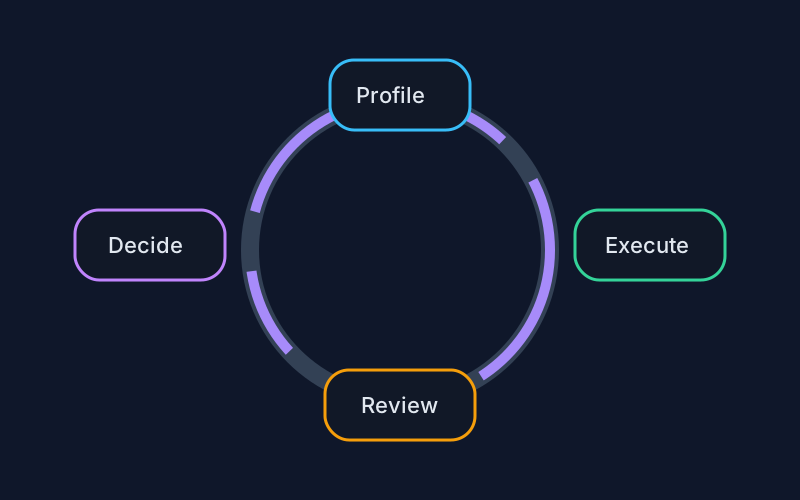
The research prototype combines edge-side task profiling, a lightweight decision layer, telemetry around task outcomes, and a web-based interface for reviewing where work is executed and how the tradeoffs change.
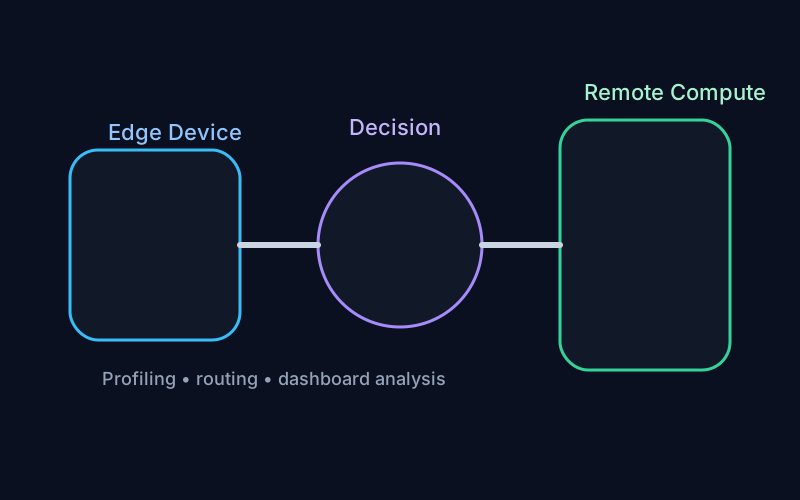
A high-level view of the main blocks and handoffs in the current prototype or concept.
Measures local resource conditions and captures the metadata needed for execution decisions.
Evaluates whether a task should stay on the device or be offloaded based on the current policy.
Accepts selected tasks, executes heavier work, and returns outcomes to the device or monitoring layer.
Visualizes task routing choices, latency, and execution patterns for analysis.
Serves as the constrained execution environment for local task handling and telemetry collection.
Encodes the logic that decides whether a task should remain local or be offloaded.
Captures timing, resource, and routing information for later comparison.
Organizes experiment runs and execution outcomes into a more usable research view.
Supports lightweight telemetry and coordination between the device and the analysis path.
Carries selected tasks into a higher-capability compute environment for experimentation.
Transparent decision logging around local versus remote execution.
Dashboard views for comparing routing outcomes across experiment runs.
A research-friendly prototype structure that can evolve without implying a finished product.
Current work is centered on profiling local task costs, encoding decision policies, and surfacing experiment results in a dashboard that makes execution tradeoffs easier to analyze.
Evaluation is focused on comparative runs, execution timing, and consistency of telemetry rather than deployment-style uptime claims.
Latency savings are not guaranteed once transport overhead is included.
Research instrumentation must stay lightweight enough not to distort the experiment itself.
Established an early research platform for analyzing edge-versus-cloud execution tradeoffs.
Observability is essential when workload partitioning logic becomes dynamic.
A research prototype still benefits from disciplined system architecture and clean interfaces.
Compare additional decision policies under different connectivity assumptions.
Add more representative workloads beyond simple proof-of-concept tasks.
This project intentionally leans more research-oriented than deployment-oriented. Its value comes from making a difficult systems question observable: when does offloading help, and when does it just move complexity into a less visible place?
That makes it a strong portfolio piece for the IoTSolutions positioning. It demonstrates that the business can support not only practical prototype builds, but also deeper technical investigation when the architecture itself is the challenge.
Firmware & Device Logic
Firmware-focused development for microcontroller-based systems, sensor interfaces, device logic, and hardware integration.
Data Interfaces
Software interfaces and platform-oriented development for monitoring, telemetry visualization, device status, and connected operations.
Guidance & Implementation Support
Technical guidance and prototype development support for research, experimentation, instrumentation, and academic engineering work.
Supporting Software
Web application development focused on connected products, dashboards, internal tools, and technical business systems.
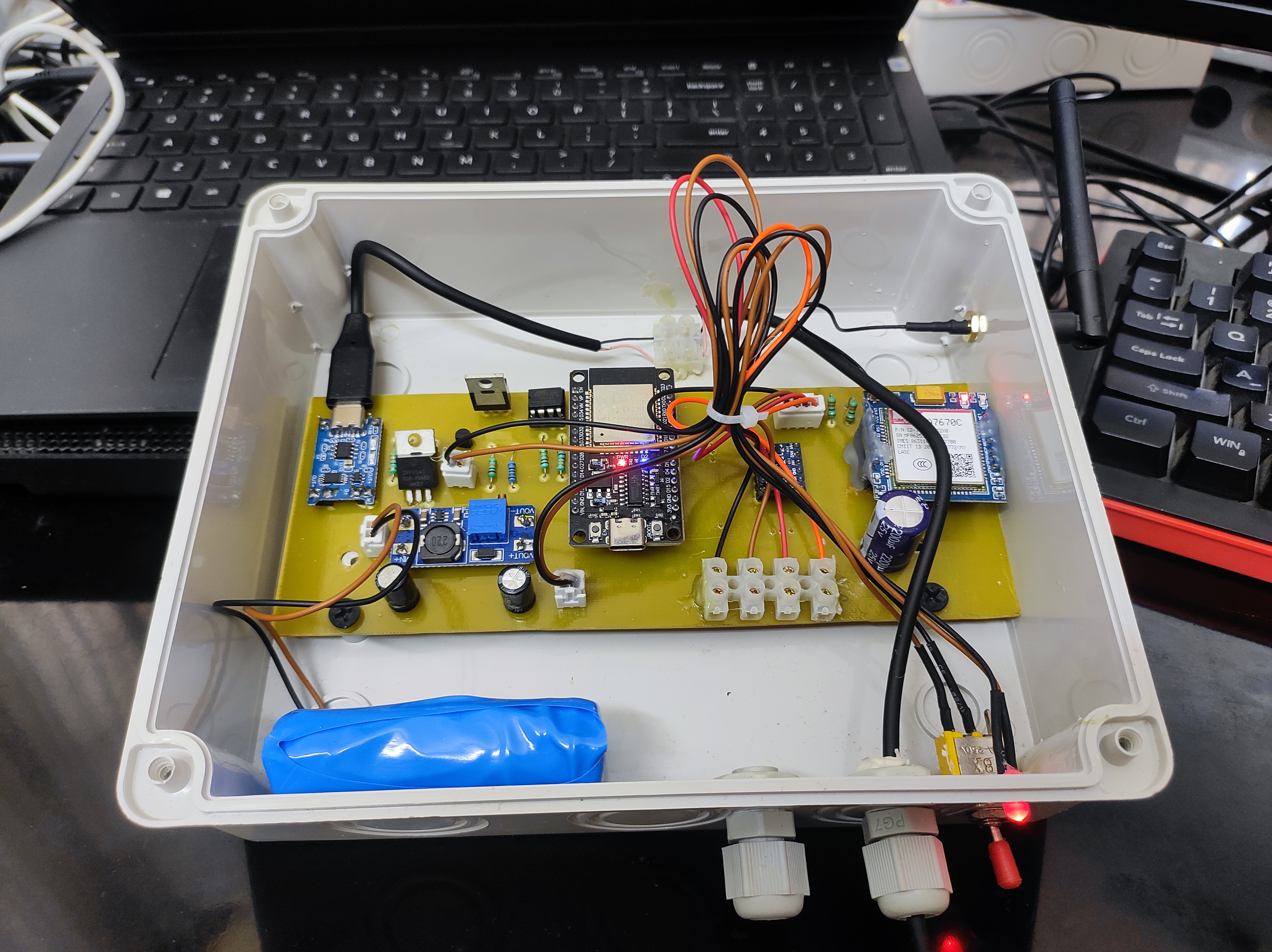
A compact ESP32-based microclimate monitoring device using an SHT45 sensor, GSM communication, OTA firmware updates, and 18650 Li-ion battery backup.

A flexible ESP32-based agricultural automation system with Wi-Fi and GSM connectivity, sensor-driven control, manual and automatic operation, and mobile and web monitoring.
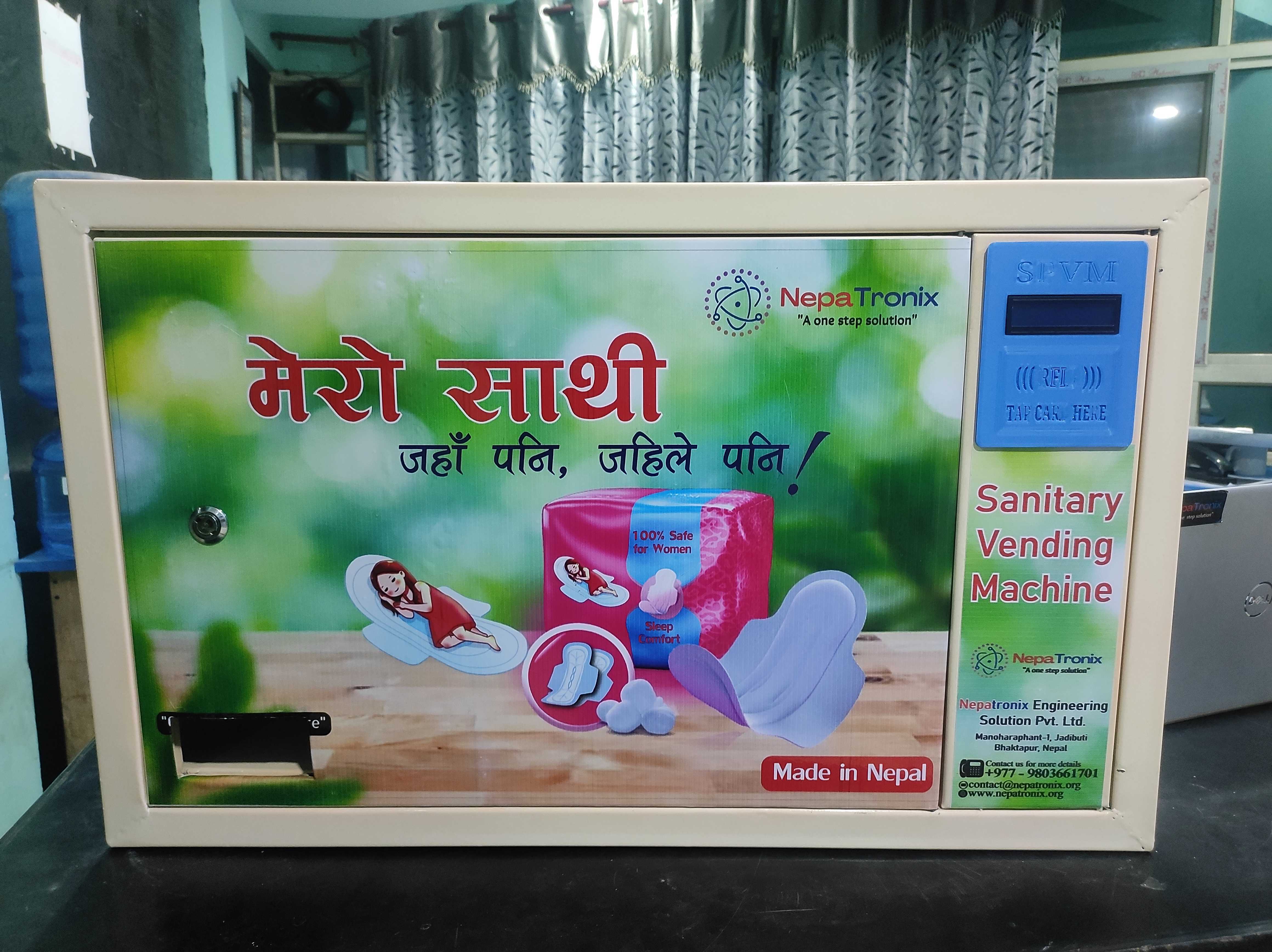
An ESP32-based sanitary pad vending machine with RFID access, automated stepper-motor dispensing, local status display, battery backup, and remote monitoring.
Need a similar system?
If the challenge looks similar to this case study, we can map scope, hardware, firmware, connectivity, and supporting software before the build gets expensive.